Citi's highest-value clients were stuck waiting. The Citigold mobile app served high-net-worth customers, but the experience was advisor-gated by design — if a client wanted to execute a trade, they had to contact their financial advisor and wait, sometimes for hours, while markets moved without them. Citi wanted to rethink the whole thing.
Citi's highest-value clients were stuck waiting. The Citigold mobile app served high-net-worth customers, but the experience was advisor-gated by design — if a client wanted to execute a trade, they had to contact their financial advisor and wait, sometimes for hours, while markets moved without them. Citi wanted to rethink the whole thing.
The core tension was obvious once you named it: these clients expected the speed and autonomy of a modern investing app, but they also valued the advisor relationship that came with their tier of service. A good design couldn't force a trade-off between the two. It had to deliver both.
I led the design portion of the rebuild. Three teams were involved — Citi's internal group and two external agencies — and one of my first priorities was making sure what shipped felt like a single product, not three overlapping visions stitched together. I owned the design vision, the quality bar, and the through-line.
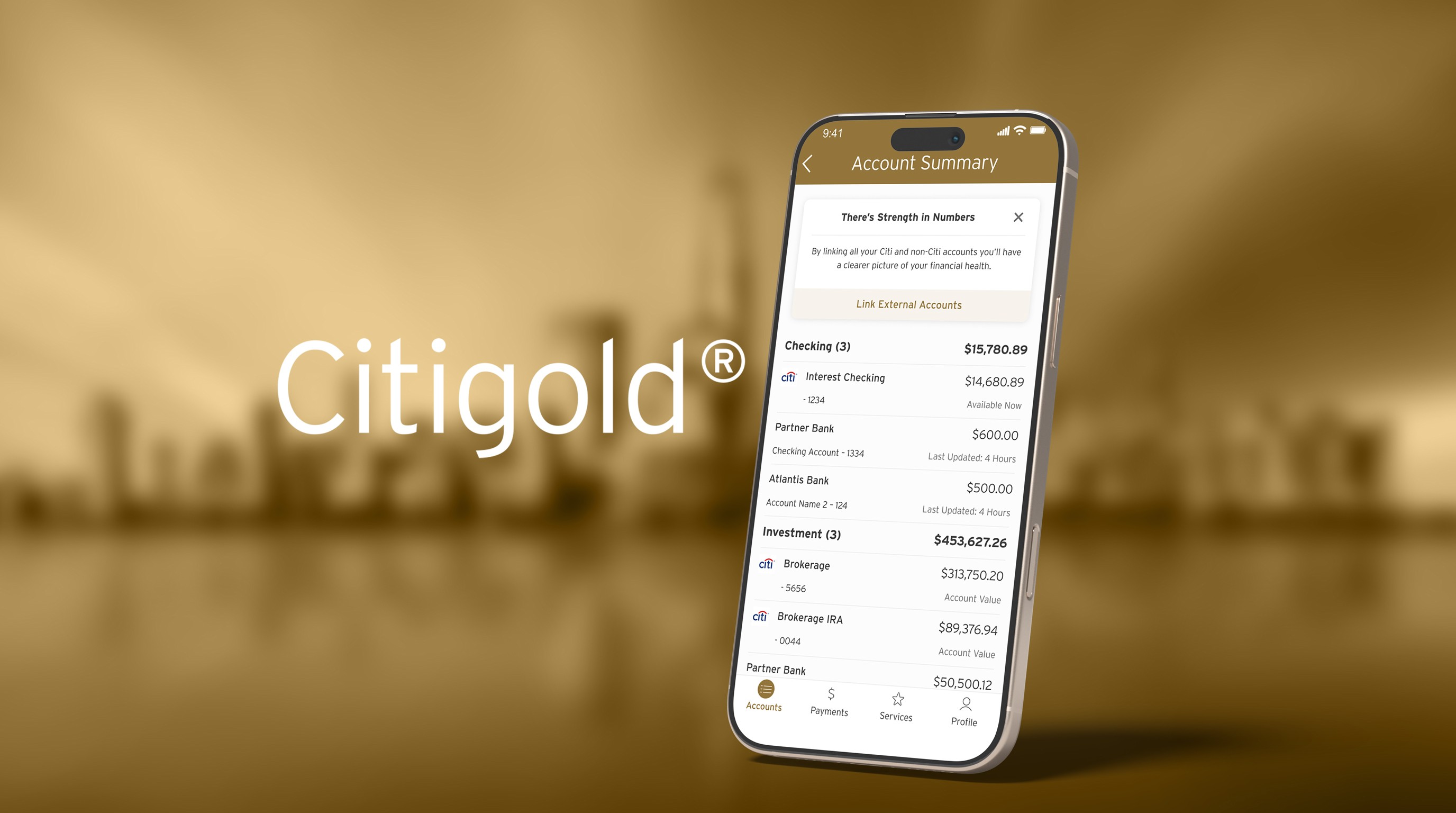
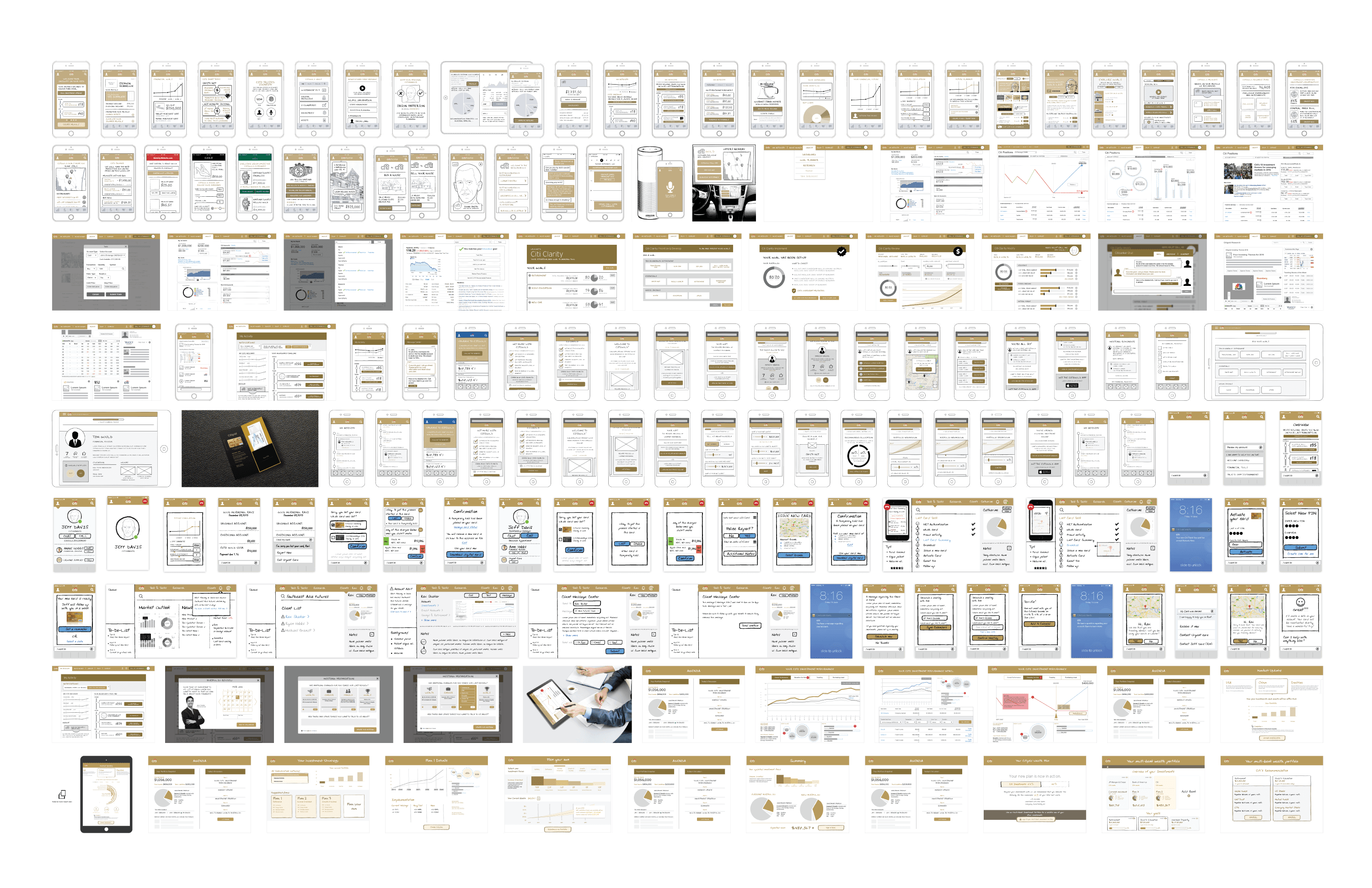
From there, every decision came back to the same principle: shift control to the user without severing the relationship. We introduced real-time investing so clients could trade on demand directly in the app. We redesigned the dashboard around the portfolio itself, so the first thing a user saw was their financial position and the next thing they could do was act on it. We integrated wealth management end-to-end — opening a brokerage account, pulling tax documents, managing investments — so the app stopped sending users elsewhere mid-task. And we kept the advisor one tap away throughout, because the point was never to replace the relationship. It was to make it optional, not mandatory.
The constraints were real. High regulatory exposure, significant financial risk on the user side, and a long list of stakeholders. We partnered closely with product, engineering, QA, and compliance so the design wasn't just elegant on a Figma board — it was shippable, scalable, and defensible in front of a regulator.
The results moved the business. The new experience produced a 95% cost reduction compared to the old advisor-dependent workflow. Launch added roughly 2,500 new clients, and the app now averages hundreds of thousands of daily active users. Brokerage account approval time dropped 75%.
The takeaway for me wasn't really about the app. It was proof that design, done with enough rigor, can change the actual business model underneath a product — not just the surface it presents.
The core tension was obvious once you named it: these clients expected the speed and autonomy of a modern investing app, but they also valued the advisor relationship that came with their tier of service. A good design couldn't force a trade-off between the two. It had to deliver both.
I led the design portion of the rebuild. Three teams were involved — Citi's internal group and two external agencies — and one of my first priorities was making sure what shipped felt like a single product, not three overlapping visions stitched together. I owned the design vision, the quality bar, and the through-line.
From there, every decision came back to the same principle: shift control to the user without severing the relationship. We introduced real-time investing so clients could trade on demand directly in the app. We redesigned the dashboard around the portfolio itself, so the first thing a user saw was their financial position and the next thing they could do was act on it. We integrated wealth management end-to-end — opening a brokerage account, pulling tax documents, managing investments — so the app stopped sending users elsewhere mid-task. And we kept the advisor one tap away throughout, because the point was never to replace the relationship. It was to make it optional, not mandatory.
The constraints were real. High regulatory exposure, significant financial risk on the user side, and a long list of stakeholders. We partnered closely with product, engineering, QA, and compliance so the design wasn't just elegant on a Figma board — it was shippable, scalable, and defensible in front of a regulator.
The results moved the business. The new experience produced a 95% cost reduction compared to the old advisor-dependent workflow. Launch added roughly 2,500 new clients, and the app now averages hundreds of thousands of daily active users. Brokerage account approval time dropped 75%.
The takeaway for me wasn't really about the app. It was proof that design, done with enough rigor, can change the actual business model underneath a product — not just the surface it presents.